Gaote Holding Group focuses on the research and development and production of various valves


-
Products

-
-
-
Product Overview
The Gaote Holding double-flange expansion joint adopts a national standard structural design, with its core features being double-flange connections, rod-guided positioning, and rubber sealing. It enables axial and radial displacement compensation in pipelines, adjustment for installation errors, as well as vibration damping and noise reduction. The product’s materials and manufacturing processes meet national standards, offering excellent corrosion resistance and reliable sealing performance. It is suitable for pipeline systems in various fields such as municipal engineering, heating, and chemical industries, serving as a critical component for enhancing pipeline operational stability and extending equipment service life.
The double-flange expansion joint (also known as a double-flange loose-sleeve expansion coupling) is used in piping systems to address... Displacement compensation, installation error adjustment, vibration and noise reduction The core matching components, products of Gaote Holdings, are designed and manufactured strictly in compliance with national standards, and are compatible with various industrial and municipal pipelines, offering both ease of installation and long-term operational reliability.
I. Core Product Advantages
- National standard structure Fully compliant with the requirements of GB/T 12465 “Flexible Expansion Joints for Piping Systems,” and compatible with mainstream domestic piping standards.
- Precise compensation The axial expansion and contraction amount is adjustable, effectively absorbing displacements caused by thermal expansion and contraction of pipelines as well as foundation settlement.
- Reliable sealing Equipped with a built-in flexible sealing ring, the leakage rate meets the Class A standard specified in GB/T 13927 “Industrial Valves — Pressure Testing.”
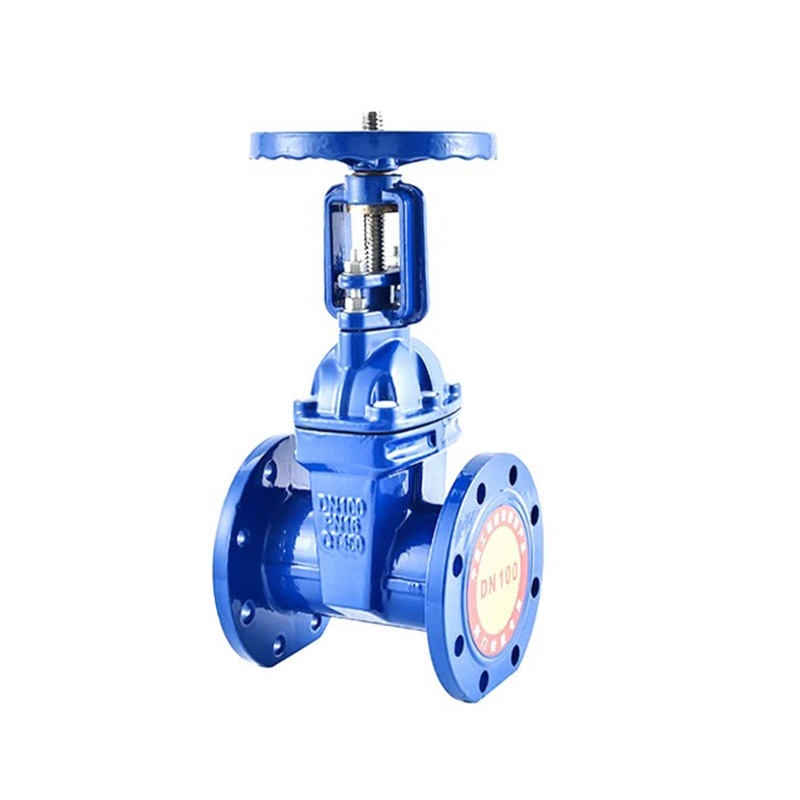
- Corrosion-resistant and durable Overall epoxy resin coating (blue coating in the image), resistant to acid and alkali corrosion, suitable for multi-media environments;
- Easy to install Double flange + tie rod structure (stainless steel tie rod shown in the image), enabling fine-tuning of installation errors on-site.
II. Core Structural Features (with product images)
As shown in the product images, this double-flange expansion joint adopts the classic structure conforming to the national standard:
- Connection type : Both ends adopt Raised-face flange (Image of the end-face flange) The flange dimensions and sealing surface comply with the requirements of GB/T 9113, "Integral Steel Pipe Flanges," and are compatible with various types of pipeline flanges.
- Telescopic structure The intermediate expansion joint and flange adopt a nested design, working in coordination. Rubber sealing ring (Image-end face sealing groove built-in component) Enables axial expansion and contraction with controllable stroke.
- Limiting component : Matching Stainless steel pull rod + nut (The lever assembly shown in the image) can limit the extension and retraction range, preventing excessive extension or retraction from damaging the seal.
- Anti-corrosion coating The entire product features electrostatic spraying with epoxy resin (blue appearance in the image). Its adhesion meets the Level 2 requirements of GB/T 1720, “Method for Determination of Adhesion of Paint Films,” and is suitable for use in humid and corrosive environments.
III. Main Technical Parameters (National Standard)
Table: Main Technical Parameters of Double-Flange Expansion Joints (National Standard)
| Parameter Name | Value / Range | Unit | National standard basis |
|---|---|---|---|
| Nominal Diameter (DN) | 50~600 | mm | GB/T 12465 "Pipe Line Loose-Set Expansion Joints" |
| Nominal pressure (PN) | 1.0, 1.6, 2.5 | MPa | GB/T 1048 "Definition and Selection of Pipeline Components PN" |
| Axial expansion amount | 15–50 (increases with DN) | mm | GB/T 12465 "Pipe Line Loose-Set Expansion Joints" |
| Radial displacement amount | ≤5 | mm | GB/T 12465 "Pipe Line Loose-Set Expansion Joints" |
| Applicable medium | Water, oil products, mildly corrosive liquids | - | - (Suitable for conventional pipeline media) |
| Operating temperature | -20~120℃ | Celsius | - (Medium temperature adaptation) |
| Flange standard | GB/T 9113 (Raised Face) | - | GB/T 9113 "Integral Steel Pipe Flanges" |
IV. Materials for Main Components (National Standard)
Table: Main Component Materials for Double-Flange Expansion Joints (National Standard)
| Part Name | Material | Implementation standard |
|---|---|---|
| Flange / Expansion Joint | Ductile iron QT450-10 | GB/T 1348 "Ductile Iron Castings" |
| Sealing ring | Nitrile rubber NBR | GB/T 5574 "Rubber Sheets for Industrial Use" |
| Rod / Nut | Stainless steel 304 | GB/T 1220 "Stainless Steel Bars" |
| Coating | Epoxy resin | GB/T 1720 "Method for Determination of Adhesion of Paint Films" |
V. Typical Application Scenarios
This product is widely compatible with various pipeline systems:
- Municipal Engineering : Drainage and water supply networks, and pipelines in wastewater treatment plants, absorb displacement caused by foundation settlement.
- Thermal system District heating pipelines, compensating for thermal expansion and contraction of the pipes;
- Petrochemicals Process medium conveying pipelines that provide vibration damping and noise reduction, and are compatible with equipment vibrations.
- Power industry — Circulating water system for thermal power generation and desulfurization pipelines, addressing pipeline installation errors;
- Building fire protection Fire-fighting pipelines for high-rise buildings, adapted to vertical displacement of the pipes.
VI. Key Points for Installation and Operation
- Before installation, confirm that the pipe’s nominal diameter and pressure rating match those of the expansion joint.
- Align the bolt holes at both ends of the flange and tighten the flange bolts evenly (avoiding unilateral stress).
- Adjust the tie rod nuts according to the pipeline displacement requirements to set the expansion amount (do not exceed the expansion range).
- When the medium is a corrosive fluid, it is recommended to use corrosion-resistant gaskets.
Keyword
VSSJA-2 Type Double-Flange Limiting Expansion Joint
Professional valve manufacturing
Contact Us
Belongs to:
Gaote Holding Group Co., Ltd.
Tel: +86-595-8896-8800
Email: gaotegroup@126.com
Address: Chenggong Development Zone, Ximei Street, Nan'an City, Quanzhou City, Fujian Province


Leave a message
* Note: Please be sure to fill in the information accurately and keep the communication open.